Islamic monument · Cairo
Wikala Of Al-Guri
A Mamluk merchants' inn where Cairo's heritage still whirls
- City
- Cairo
- Type
- Islamic monument
- Era
- Mamluk period, early 16th century (c. 1504–1505)
Overview
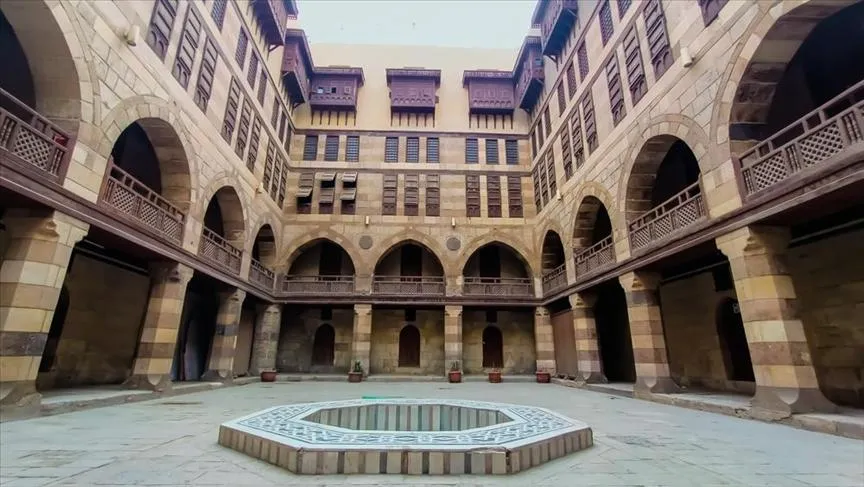
Wikala of Al-Guri is a Mamluk-era urban caravanserai in the heart of Islamic Cairo, close to Al-Azhar Mosque and the Khan al-Khalili district. Built in the early 16th century by Sultan Qansuh al-Ghuri, one of the last great Mamluk rulers, it served as a commercial inn where merchants stored goods, traded and found lodging. Today it is among the best-preserved examples of this building type in the city and lies within Historic Cairo, a UNESCO World Heritage Site.
The wikala follows the classic plan of Cairene commercial buildings: a large open central courtyard surrounded by several storeys of arcaded galleries. Ground-floor spaces were used for storage and trade, while the upper floors held rooms for visiting merchants. The monumental entrance and the stonework of the exterior reflect late Mamluk taste, and wooden mashrabiya screens on the upper levels add the delicate lattice detail typical of the period's architecture.
After centuries of changing use and decline, the building was restored and given a new cultural role. Its courtyard and surrounding rooms have hosted craft workshops and exhibitions, and it is widely known for evening Tanoura performances, a colourful Egyptian Sufi-inspired whirling dance. Visiting offers a chance to experience both the architecture of a working Mamluk trading house and a living form of Cairo's performing heritage.
What to see
- 01The spacious central courtyard framed by multi-storey arcaded galleries
- 02The monumental stone entrance and facade typical of late Mamluk architecture
- 03Wooden mashrabiya screens and the upper-floor rooms once used by merchants
- 04Tanoura whirling performances and craft displays held in the historic setting
Visitor tips
- Check current opening times and the Tanoura performance schedule locally before you go, as they can change.
- Combine your visit with nearby sights such as Al-Azhar Mosque, the Al-Ghuriya complex and Khan al-Khalili, all within walking distance.
- Wear comfortable shoes for uneven historic streets and dress modestly, as the area is a busy, traditional district.
Frequently asked questions
Who built Wikala of Al-Guri and when?
It was built by the Mamluk sultan Qansuh al-Ghuri in the early 16th century, around 1504–1505, as part of his building projects in the Al-Azhar and Al-Ghuriya area of Cairo.
What was a wikala used for?
A wikala, also called a khan or caravanserai, was a commercial building where merchants could store goods, trade and stay overnight. Its ground floor handled storage and business, while the upper floors provided lodging.
Can you watch a Tanoura show at Wikala of Al-Guri?
The wikala is well known for Tanoura performances in its courtyard, a Sufi-inspired whirling dance. Schedules and ticketing arrangements can change, so confirm current details locally before visiting.