Pyramids & tombs · Luxor · Most visited
Valley Of Kings
Where Egypt's Pharaohs Rest Beneath the Desert Cliffs
- City
- Luxor
- Type
- Pyramids & tombs
- Era
- New Kingdom, c. 1539–1075 BC
Overview
The Valley of the Kings (Wadi al-Muluk) is a royal burial ground on the west bank of the Nile at Thebes, opposite modern Luxor. For around four and a half centuries, pharaohs of the 18th to 20th Dynasties chose this secluded desert valley for their rock-cut tombs, moving away from the freestanding pyramids of earlier eras. The site lies beneath al-Qurn, a pyramid-shaped natural peak that may have reinforced its sacred character.
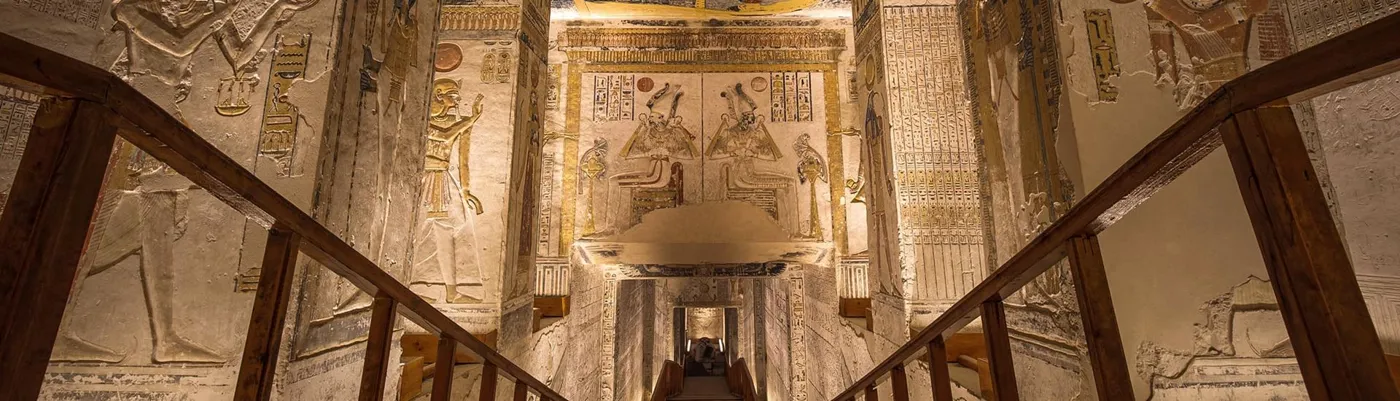
More than sixty tombs have been identified, each labeled with the prefix KV and a number following the order of discovery. They range from simple shafts to grand complexes with long corridors, pillared halls, and burial chambers decorated with funerary texts such as the Amduat and the Book of Gates. These compositions describe the sun god's nightly journey through the underworld and were meant to guide the king into the afterlife.
The valley became world famous in 1922, when Howard Carter uncovered the nearly intact tomb of Tutankhamun (KV62). Although this king reigned briefly, the discovery revealed how richly pharaohs were buried. Today the Valley is part of the UNESCO World Heritage site of Ancient Thebes and its Necropolis, inscribed in 1979. Excavation, conservation, and research continue, deepening our understanding of royal burial practice and of the artisans who built these tombs.
What to see
- 01Tomb of Tutankhamun (KV62): the small tomb discovered by Howard Carter in 1922, where the king's mummy still rests
- 02Tomb of Seti I (KV17): among the most elaborately decorated and extensive royal tombs in the valley
- 03Tomb of Ramesses VI (KV9): colorful corridors and a famous astronomical ceiling in the burial chamber
- 04Tomb of Thutmose III (KV34): an early, steeply descending tomb with a cartouche-shaped burial chamber
Visitor tips
- Arrive early in the day, as the valley is exposed desert and tomb interiors can become warm and crowded later on.
- Ticket arrangements, including which tombs need separate entry, and photography rules can change, so confirm current details at the official ticket office.
- Wear comfortable shoes for steep, uneven passages, bring water, and follow guards' instructions to help protect the fragile wall paintings.
Frequently asked questions
Where is the Valley of the Kings located?
It is on the west bank of the Nile at Thebes, across the river from the city of Luxor in Upper Egypt. It sits in the desert hills near other major sites of the Theban Necropolis.
Who is buried in the Valley of the Kings?
Mainly pharaohs of the New Kingdom's 18th, 19th, and 20th Dynasties, including Thutmose III, Seti I, Ramesses VI, and Tutankhamun. Some queens, princes, and high officials were also buried in the valley.
Are Tutankhamun's treasures still in his tomb?
No. The famous grave goods were moved to Cairo for study and display. His tomb (KV62) remains open to visitors, and the king's mummy still lies there.