Archaeological site · Minya
Tuna el-Gebel
Thoth's silent necropolis on Middle Egypt's desert edge
- City
- Minya
- Era
- Late, Ptolemaic and Roman periods, c. 4th century BC–3rd century AD (with an Amarna-era boundary stela)
Overview
Tuna el-Gebel is an archaeological site in Minya Governorate, in Middle Egypt, on the desert edge west of the Nile near Mallawi. It served as the necropolis of ancient Hermopolis Magna, known to the Egyptians as Khemenu, the cult center of Thoth, god of wisdom and writing. Over many centuries the site gathered burials, tomb-houses and underground galleries that show how Egyptian religious traditions continued through the Ptolemaic and Roman periods.
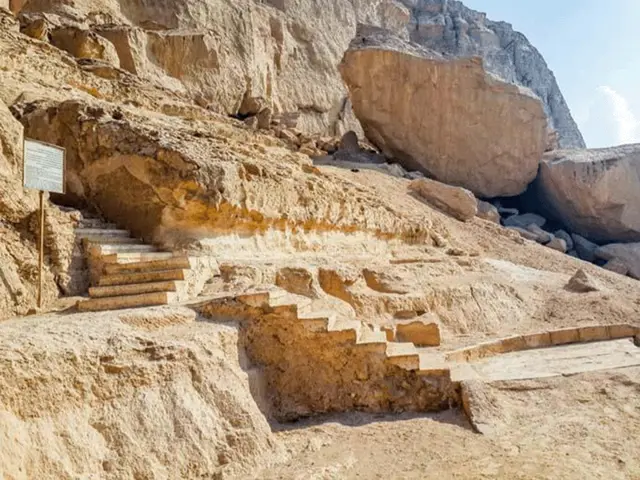
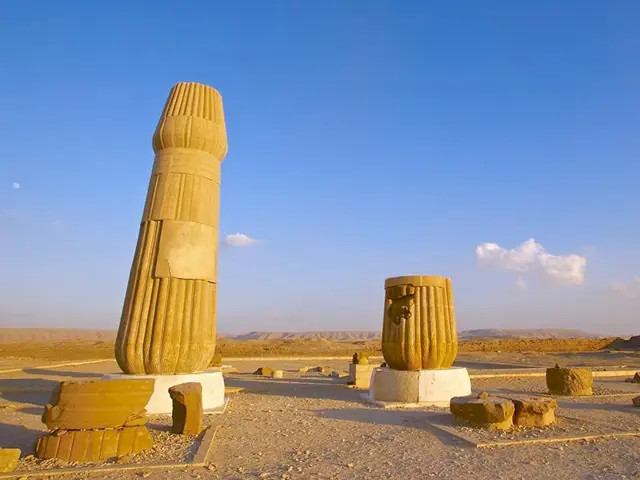
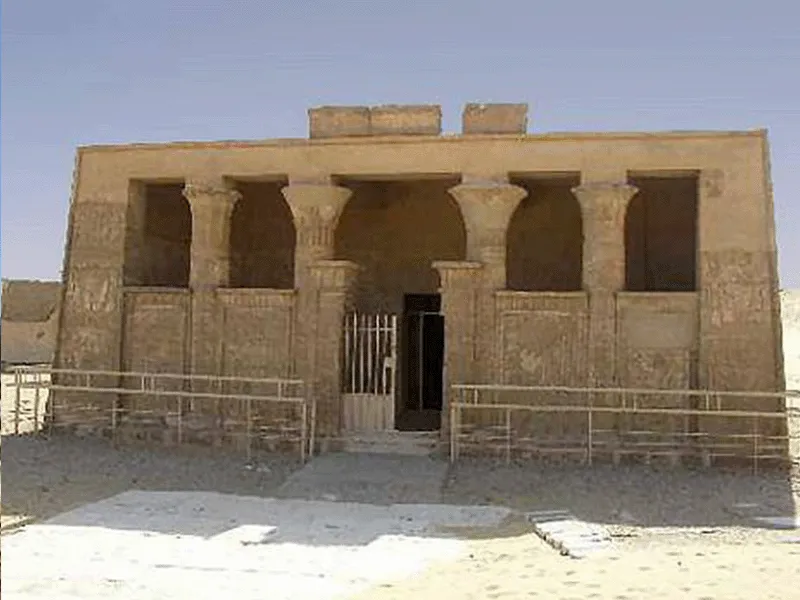
The site's history begins with one of the boundary stelae of Akhenaten, which marked the western limit of the territory of his new capital, Akhetaten (Amarna), in the 14th century BC. The necropolis grew later. Its best-known monument is the Tomb of Petosiris, a high priest of Thoth who lived around the late fourth century BC. Built like a small temple, it has reliefs that combine traditional Egyptian scenes with Greek-influenced dress and modeling.
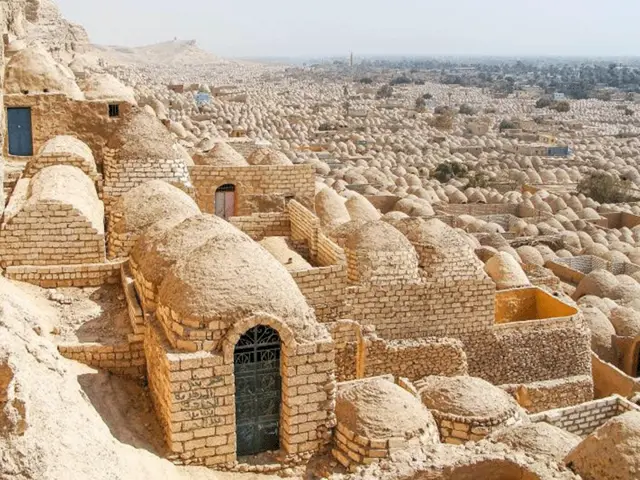
Beneath the desert plateau, long galleries once received offerings of mummified ibises and baboons, animals sacred to Thoth. Nearby, Roman-period tomb-houses reflect the funerary customs of later generations, and burials such as that of Isadora have drawn special attention. Twentieth-century excavations, notably the work led by Sami Gabra for Cairo University from the early 1930s, revealed much of what visitors see today.
What to see
- 01The Tomb of Petosiris, with reliefs that blend Egyptian and Greek-influenced styles
- 02The underground galleries of sacred ibises and baboons dedicated to Thoth
- 03Roman-period tomb-houses and the burial of Isadora
- 04Akhenaten's boundary stela marking the edge of Akhetaten's territory
Visitor tips
- Confirm current opening hours and ticket details with the local antiquities authority before you travel, as they can change.
- Wear sturdy shoes and bring water and sun protection; the site is exposed, and underground galleries can be dusty and warm.
- Combine the visit with nearby Ashmunein (Hermopolis), the Mallawi Museum and Tell el-Amarna, and check local photography rules.
Frequently asked questions
Where is Tuna el-Gebel located?
Tuna el-Gebel is in Minya Governorate, Middle Egypt, on the desert edge west of the Nile near Mallawi. It was the necropolis of ancient Hermopolis Magna (modern Ashmunein).
Who was Petosiris?
Petosiris was a high priest of Thoth who lived around the late fourth century BC. His tomb at Tuna el-Gebel is built like a small temple and is known for reliefs combining Egyptian and Greek-influenced styles.
What are the animal catacombs at Tuna el-Gebel?
They are underground galleries where mummified ibises and baboons, animals sacred to the god Thoth, were deposited as offerings by pilgrims over many centuries.