Archaeological site · Luxor
Tombs Of The Nobles
Painted chapels where Thebes' officials celebrated life eternal
- City
- Luxor
- Era
- New Kingdom, c. 1550–1070 BC
Overview
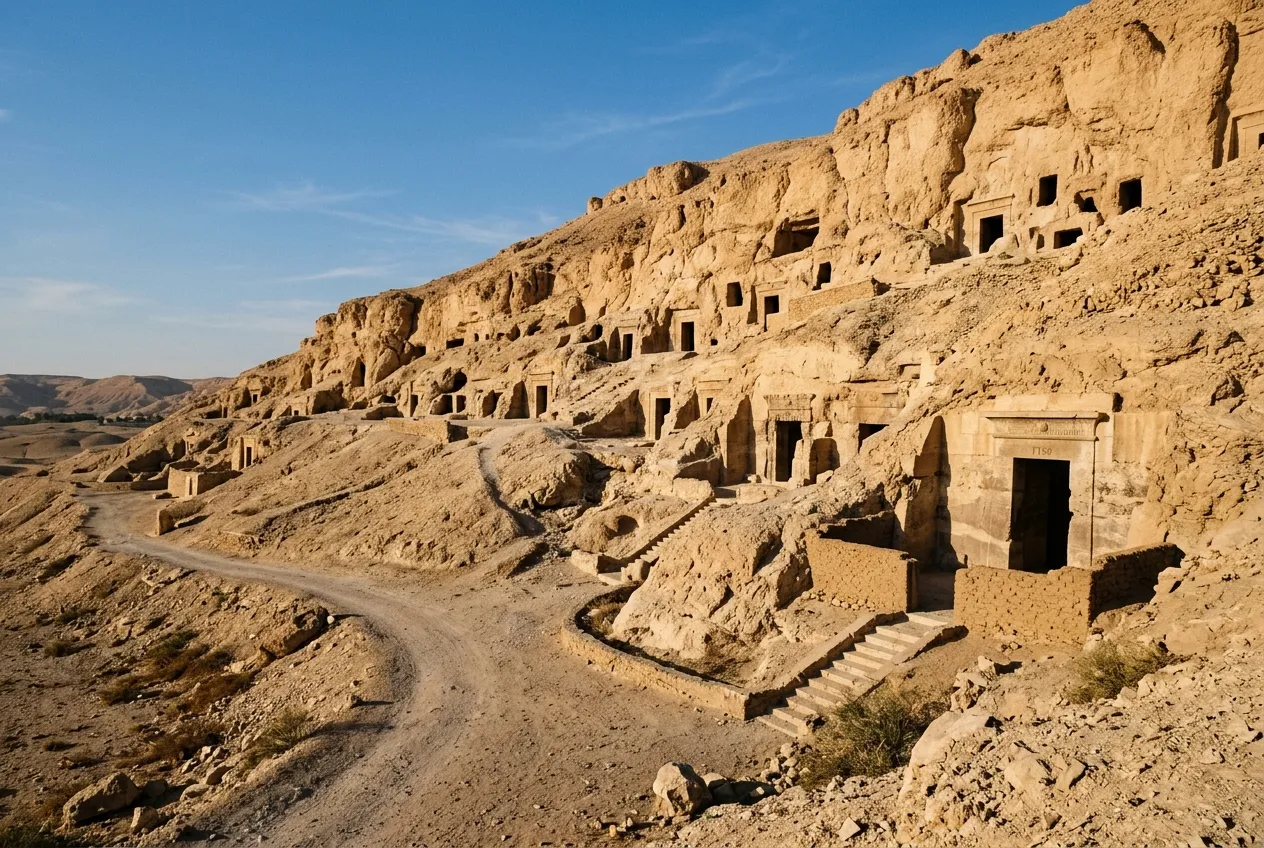
The Tombs of the Nobles form a group of rock-cut tomb chapels on the West Bank of the Nile at Luxor, part of the vast Theban Necropolis. They were made for high officials, priests, scribes, and military men who served the pharaohs of ancient Thebes, rather than for the kings themselves. Scattered across several hillsides, including Sheikh Abd el-Qurna, El-Khokha, Assasif, and Qurnet Murai, they are often visited in clusters.
Most of the best-known tombs date to the New Kingdom, especially the Eighteenth Dynasty, when Thebes was the religious and political heart of Egypt. Unlike the royal tombs, these chapels celebrate life as much as the afterlife. Their painted walls show farming, fishing, hunting in the marshes, craftsmen at work, banquets with music, and offerings to the deceased, giving historians an unusually intimate view of daily life, belief, and society more than three thousand years ago.
A typical tomb has an open courtyard, a decorated chapel for offerings and a passage leading toward a statue niche, while the burial itself lay in a hidden shaft and chamber below. Famous owners include Rekhmire, a vizier under Thutmose III; Sennefer, a mayor of Thebes; Nakht, a scribe and priest; and Ramose, a vizier under Amenhotep III and Akhenaten. The area belongs to the UNESCO World Heritage site of Ancient Thebes with its Necropolis.
What to see
- 01Tomb of Rekhmire (TT100): large painted scenes of tribute, administration, and crafts under a vizier of Thutmose III
- 02Tomb of Sennefer (TT96): the famous ceiling painted with grapevines, known as the Tomb of the Vines
- 03Tomb of Nakht (TT52): a small chapel with fine, colorful scenes of farming, feasting, and hunting
- 04Tomb of Ramose (TT55): elegant carved reliefs from the reigns of Amenhotep III and Akhenaten
Visitor tips
- Visit in the morning, when the West Bank is cooler, and bring water, sun protection, and comfortable shoes for uneven paths and steps.
- Check at the West Bank ticket office which tombs are open on the day of your visit, as access can change and tombs are often opened on rotation.
- Follow the rules on photography and never touch the painted walls; oils and moisture damage the fragile pigments.
Frequently asked questions
Where are the Tombs of the Nobles located?
They are on the West Bank of the Nile at Luxor, within the ancient Theban Necropolis, spread across areas such as Sheikh Abd el-Qurna, El-Khokha, Assasif, and Qurnet Murai.
Who was buried in the Tombs of the Nobles?
They were built for high-ranking officials, priests, scribes, and military figures of ancient Thebes, mainly during the New Kingdom, rather than for pharaohs.
Are the Tombs of the Nobles the same as the Valley of the Kings?
No. The Valley of the Kings holds royal tombs, while the Tombs of the Nobles are private tombs of officials, known for painted scenes of daily life rather than royal funerary texts.