Archaeological site · Al-Sharqia
Tanis (San al-Hagar)
Delta capital of pharaohs and their silver coffins
- City
- Al-Sharqia
- Era
- Third Intermediate Period, c. 1070–712 BC
Overview
Tanis, known in Arabic as San al-Hagar, is one of the largest and most important archaeological sites in the Nile Delta, in Al-Sharqia Governorate. It rises from the flat farmland as a vast mound of ruins. The city served as a royal capital during the Third Intermediate Period, especially under the 21st and 22nd Dynasties. The Arabic name, roughly "San of the stones," recalls the many scattered blocks of granite and limestone that cover the site.
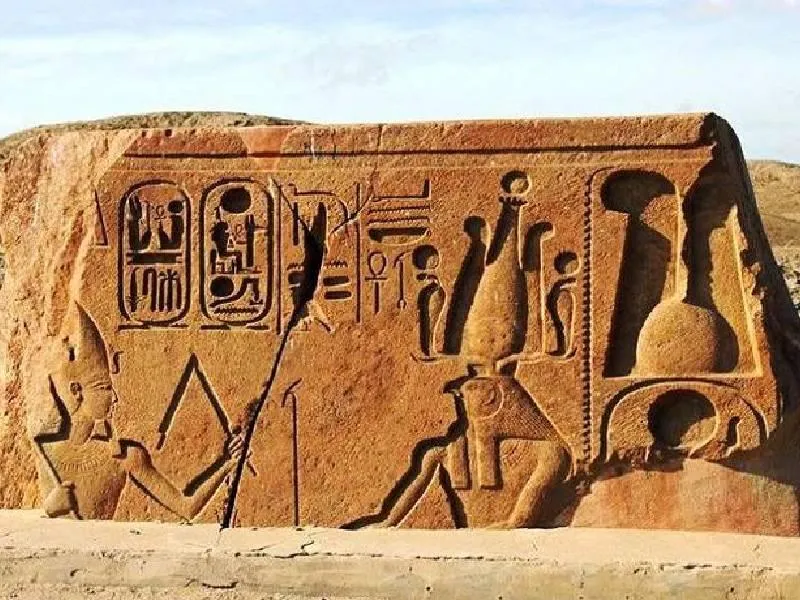
The kings of Tanis built a great temple precinct for Amun, Mut and Khonsu, enclosed by massive mudbrick walls. Many of the obelisks, statues and architectural blocks used there were brought from earlier sites, notably Pi-Ramesses, the Ramesside capital. This is why the name of Ramesses II appears so often among the ruins. Tanis therefore preserves a layered record of New Kingdom grandeur, reused and reinterpreted by later rulers who wanted to project continuity with the past.
In 1939 the French archaeologist Pierre Montet uncovered a group of royal tombs inside the temple enclosure. They included the burial of Psusennes I, with its silver coffin and gold funerary mask, and the burials of other kings such as Amenemope and Shoshenq II. The finds are often compared with Tutankhamun's treasures. Most of the portable objects are now displayed in Cairo, while the site itself continues to be studied by archaeological missions.
What to see
- 01The ruins of the great temple of Amun, with fallen colossal statues and broken obelisks
- 02The royal necropolis within the temple enclosure, where Psusennes I and other kings were buried
- 03Reused Ramesside monuments carrying the names and inscriptions of Ramesses II
- 04The massive mudbrick enclosure walls and the wide mound that shows the scale of the ancient city
Visitor tips
- Confirm access arrangements with local antiquities authorities before travelling, as conditions at remote Delta sites can change.
- Visit the Egyptian Museum in Cairo as well, since the best-known treasures from the Tanis royal tombs are displayed there.
- Wear sun protection and sturdy shoes, because the site is open, uneven and has little shade.
Frequently asked questions
Where is Tanis (San al-Hagar)?
Tanis is in Al-Sharqia Governorate, in the northeastern Nile Delta of Egypt. It is a large archaeological mound surrounded by farmland.
Why is Tanis important?
It was a royal capital during the 21st and 22nd Dynasties and contains the royal tombs found by Pierre Montet. Its temple precinct also preserves many monuments reused from Pi-Ramesses.
Where are the treasures of Tanis displayed?
Most of the best-known objects, including the silver coffin and gold mask of Psusennes I, are displayed in the Egyptian Museum in Cairo. Check the museum for the latest display arrangements.