Overview
The Temple of Mut stands inside the Precinct of Mut, a walled sanctuary south of the main Amun-Re enclosure at Karnak, on the east bank of Luxor. It was dedicated to Mut, consort of Amun-Re and mother of the moon god Khonsu, who together formed the Theban Triad. Often shown as a woman wearing the double crown, or as a vulture, Mut was one of the most important goddesses of ancient Thebes. A processional way once linked her precinct to the great temple of Amun.
Much of the surviving complex dates to the New Kingdom, especially the reign of Amenhotep III in the 18th Dynasty, who enlarged the sanctuary and filled it with statues of the lioness goddess Sekhmet. Later periods, including the Ptolemaic era, saw further building and restoration. The temple is wrapped on three sides by a crescent-shaped sacred lake, known as Isheru, a distinctive feature that sets its layout apart from most Egyptian temples.
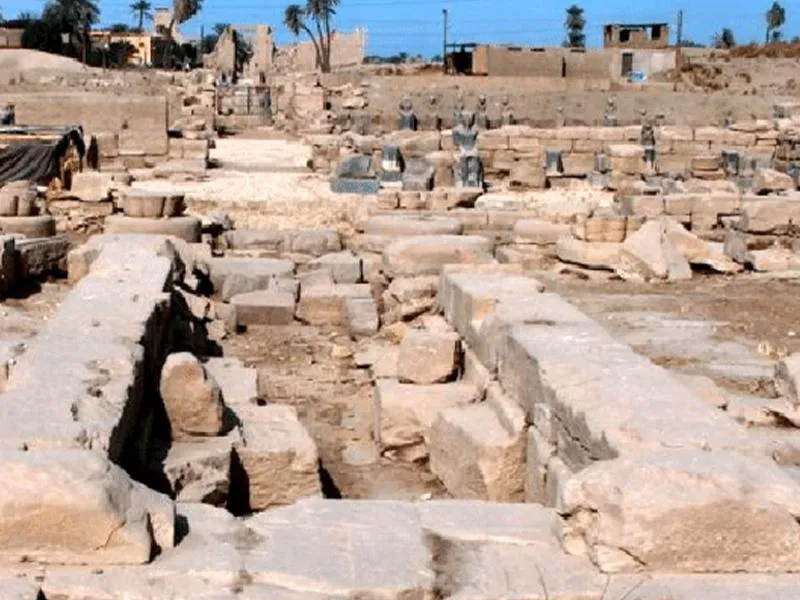
Today the precinct is largely ruined, yet it is usually calmer than the main Karnak complex and rewards visitors who enjoy atmosphere and archaeology. Early explorations by Margaret Benson and Janet Gourlay in the 1890s, followed by long-running work by a Johns Hopkins University expedition from 1976, have revealed much about its architecture and cult. The site is associated with festivals honoring the returning Distant Goddess, including the Festival of Drunkenness.
What to see
- 01The crescent-shaped sacred lake (Isheru) curving around the temple
- 02Statues of the lioness goddess Sekhmet linked to Amenhotep III's building
- 03Ruined gateways, courts and the sanctuary of the goddess Mut
- 04The site's role in festivals of the Distant Goddess and ongoing excavations
Visitor tips
- Check current opening hours and whether a separate ticket is needed with the site's ticket office or a licensed guide before you go.
- Visit in the early morning or late afternoon, and bring a hat, water and sturdy shoes, as the ground is uneven and shade is limited.
- Pair the visit with the main Karnak temple and ask a guide to explain Mut's role in the Theban Triad to understand the site better.
Frequently asked questions
Who was the goddess Mut?
Mut was an ancient Egyptian goddess, consort of Amun-Re and mother of Khonsu. Together they formed the Theban Triad. She is often shown as a woman in the double crown or as a vulture.
Where is the Mut Temple in relation to Karnak?
It lies within the Precinct of Mut, a walled area south of the main Amun-Re enclosure at Karnak in Luxor. A processional way once connected it to the great temple of Amun.
What makes the Temple of Mut unusual?
Its sanctuary is surrounded on three sides by a crescent-shaped sacred lake called Isheru. The precinct is also known for its many Sekhmet statues from the time of Amenhotep III.