Overview
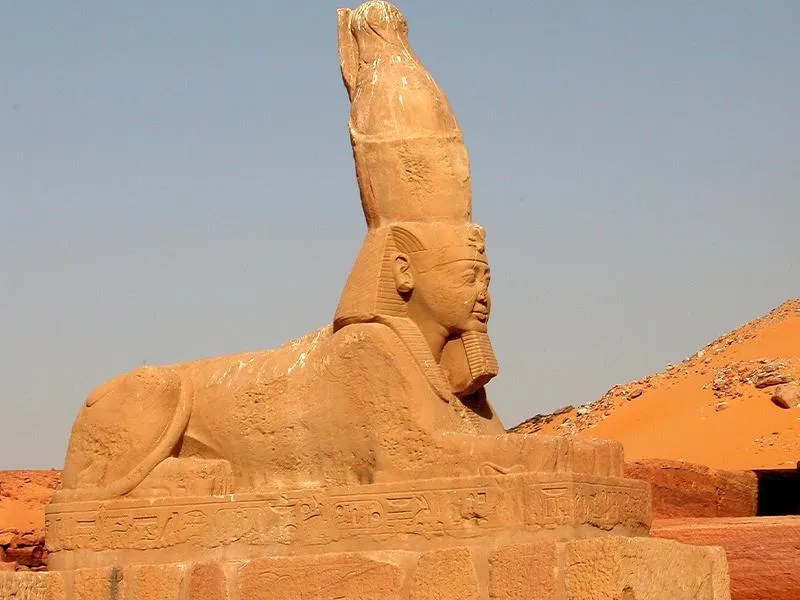
The Temple of Wadi el-Sebua stands on the western shore of Lake Nasser in Egyptian Nubia, south of Aswan. Built during the reign of Ramesses II in the 19th Dynasty, it is often called the 'Valley of the Lions' because an avenue of sphinxes once guided worshippers toward its entrance. The monument was conceived as a Nubian shrine that tied the pharaoh's authority to the great gods of Egypt.
The temple combines two building traditions: its front courts and pylon are freestanding masonry, while the inner halls and sanctuary are cut into the sandstone cliff behind. It honored Amun-Re and Ra-Horakhty, and also the king himself as a divine figure. Construction is linked to Setau, the viceroy of Kush under Ramesses II, who administered Nubia on the king's behalf.
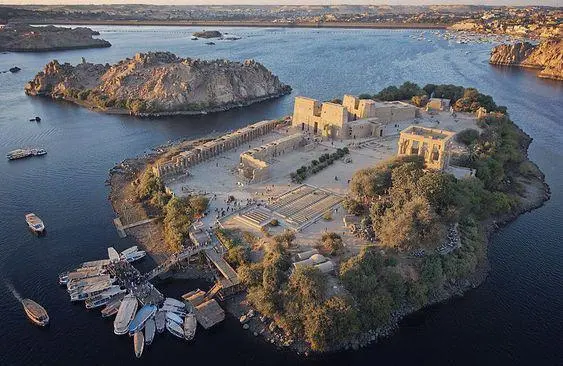
When the Aswan High Dam threatened to flood Nubia, the temple was dismantled and rebuilt on higher ground as part of the UNESCO international campaign of the 1960s. Today it stands at a new site not far from its original location, alongside the relocated temples of Dakka and Maharraka. Its walls also preserve traces of its later Christian reuse, when the sanctuary served as a church.
What to see
- 01The approach avenue of sphinxes that gave the site its 'Valley of the Lions' name
- 02The pylon and open courts with colossal statues of Ramesses II
- 03The pillared hall with Osirid statues of the king, partly cut into the cliff
- 04The sanctuary, where later Christian paintings cover earlier pharaonic reliefs
Visitor tips
- Check current access arrangements before you go: the site is in remote Nubia and is often visited as part of a Lake Nasser cruise or an organized tour.
- Bring water, sun protection and sturdy shoes, as the temple stands in open desert with little shade.
- Visit the nearby relocated temples of Dakka and Maharraka as well, since they stand close to Wadi el-Sebua.
Frequently asked questions
Why is it called Wadi el-Sebua?
The name means 'Valley of the Lions' in Arabic. It refers to the sphinxes that line the approach to the temple's entrance.
Who built the Temple of Wadi el-Sebua?
It was built under Ramesses II in the 19th Dynasty. Construction is associated with Setau, the viceroy of Kush, and the temple honors Amun-Re, Ra-Horakhty and the deified king.
Was the temple moved?
Yes. Because of the rising waters behind the Aswan High Dam, the temple was dismantled and rebuilt on higher ground during the UNESCO Nubian campaign of the 1960s.