Overview
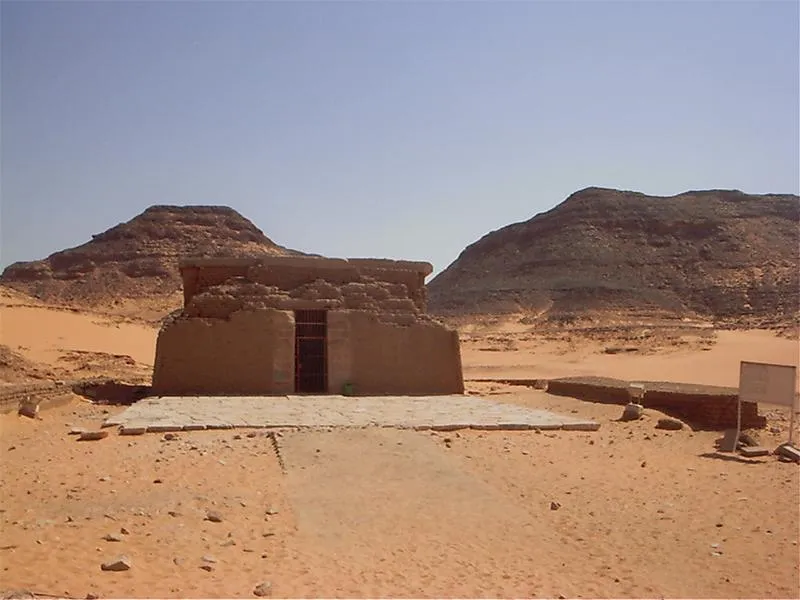
The Temple of Amada is one of the oldest surviving Egyptian temples in Lower Nubia, in the far south of Aswan Governorate. Begun under Thutmose III and completed under his son Amenhotep II, it was dedicated to the gods Amun-Re and Re-Horakhty. It reflects the New Kingdom's determination to anchor Egyptian religion and royal authority deep in Nubia, long after the first fortresses were built along the Nile.
Although modest in size, the temple is admired for the quality of its raised and sunk reliefs, many of which keep traces of their original colour. Scenes show the kings making offerings and being embraced by deities. Thutmose IV later added a pillared hall at the front, giving the building the layered, multi-reign character typical of Egyptian temples that were extended over generations.
Amada is also famous for its modern story. When the High Dam threatened to flood Nubia's monuments, the temple was saved in the 1960s through an exceptional engineering feat: it was moved intact, on rails, to higher ground. Today it stands on the shores of Lake Nasser, a rewarding stop for travellers interested in Nubian heritage and the rescue campaign that preserved it.
What to see
- 01Finely carved and painted reliefs of Thutmose III and Amenhotep II with the gods
- 02The pillared hall added by Thutmose IV, with decorated columns
- 03The commemorative stele of Amenhotep II, recording a royal campaign
- 04Traces of the building's later reuse as a Christian church
Visitor tips
- Amada lies in Lower Nubia and is usually reached on Lake Nasser cruises or organised excursions; confirm access and logistics with your operator beforehand.
- Bring water, sun protection and a hat, as the site is exposed and shade is limited.
- Look closely at the reliefs and ask about photography rules at the site; opening arrangements and ticketing can change, so check locally.
Frequently asked questions
Who built the Temple of Amada?
Construction began under Thutmose III and was completed by Amenhotep II during the 18th Dynasty. Thutmose IV later added a pillared hall at the front.
Why was the Temple of Amada moved?
The construction of the Aswan High Dam and the creation of Lake Nasser threatened to submerge Nubian monuments. In the 1960s the temple was relocated intact, on rails, to higher ground as part of the international Nubian rescue campaign.
Which gods was the Temple of Amada dedicated to?
It was dedicated to Amun-Re and Re-Horakhty, two major deities of the New Kingdom, who appear alongside the kings in its reliefs.