Archaeological site · Aswan
Elkab Tombs
Cliff tombs and ancient walls of vulture-goddess Nekhbet
- City
- Aswan
- Era
- Predynastic to Greco-Roman; main tombs New Kingdom, c. 1550–1070 BC
Overview
Elkab, known in antiquity as Nekheb, lies on the east bank of the Nile between Esna and Edfu in Upper Egypt. It was the sacred town of the vulture goddess Nekhbet, protector of Upper Egypt and of the king. Its long history stretches from prehistoric times into the Greco-Roman period. Today the site is best known for its cliff-cut tombs of local officials, set beside the remains of a vast mud-brick town enclosure and several temples.
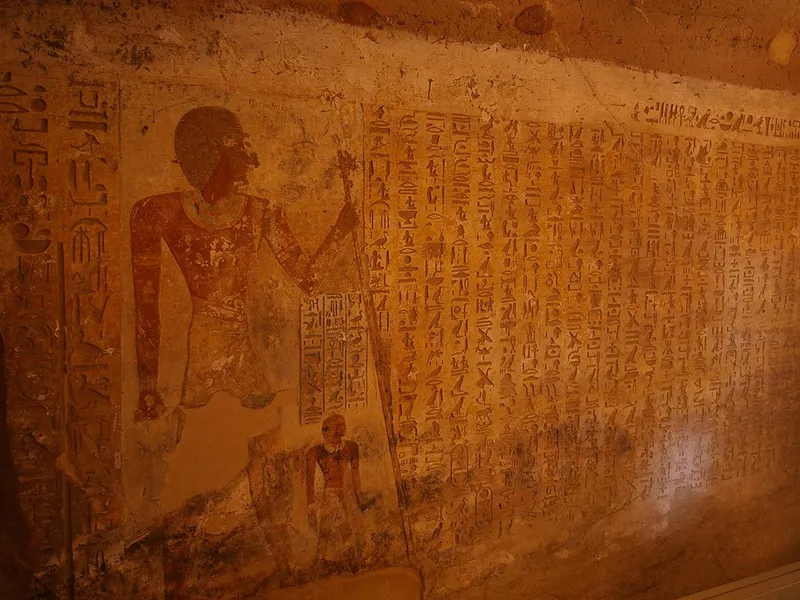
The rock-cut tombs, mostly dated to the early New Kingdom, belonged to governors, priests and military men. Their painted walls are valued as historical sources as much as works of art. The tomb of Ahmose son of Ibana carries a biographical text describing his naval career under the first kings of the 18th Dynasty, a key account of the period when the Hyksos were expelled. Paheri's tomb is famed for lively scenes of farming, fishing and feasting.
Beyond the tombs, visitors can see the immense enclosure walls of Nekheb, built of mud brick and still striking in scale, along with temple remains linked to Nekhbet and other deities. A small desert temple in a side valley adds to the sense of a sacred landscape. Across the river lies Nekhen (Hierakonpolis), the twin city of Nekheb in the formative centuries of Egyptian kingship, which gives Elkab added importance.
What to see
- 01Tomb of Ahmose son of Ibana: a famous autobiographical inscription about early 18th Dynasty campaigns
- 02Tomb of Paheri: painted scenes of agriculture, fishing, banqueting and family life
- 03Tomb of Reneni and other early New Kingdom rock-cut chapels in the cliff face
- 04Massive mud-brick enclosure walls and temple remains of ancient Nekheb
Visitor tips
- Confirm current opening arrangements and ticketing with local tourism authorities before travelling, as small sites can change their access.
- Bring water, sun protection and sturdy shoes; the site is open and exposed, with little shade and some uneven ground.
- Combine Elkab with the Temple of Edfu and a visit to the Nekhen (Hierakonpolis) area, and consider a licensed guide to help interpret the inscriptions.
Frequently asked questions
Where are the Elkab Tombs located?
They are at ancient Nekheb (modern El Kab) on the east bank of the Nile, between Esna and Edfu in Upper Egypt. The site is usually visited from Edfu or Luxor, or on a journey between Luxor and Aswan.
What are the Elkab Tombs best known for?
They are known for rock-cut tombs of local officials of the early New Kingdom, especially those of Ahmose son of Ibana, whose text describes his military service, and Paheri, whose walls show detailed scenes of daily life.
Who was Nekhbet and why was Elkab important?
Nekhbet was the vulture goddess and protector of Upper Egypt and the king. Elkab (Nekheb) was her principal cult centre, and with nearby Nekhen it played a significant role in early Egyptian kingship and religion.